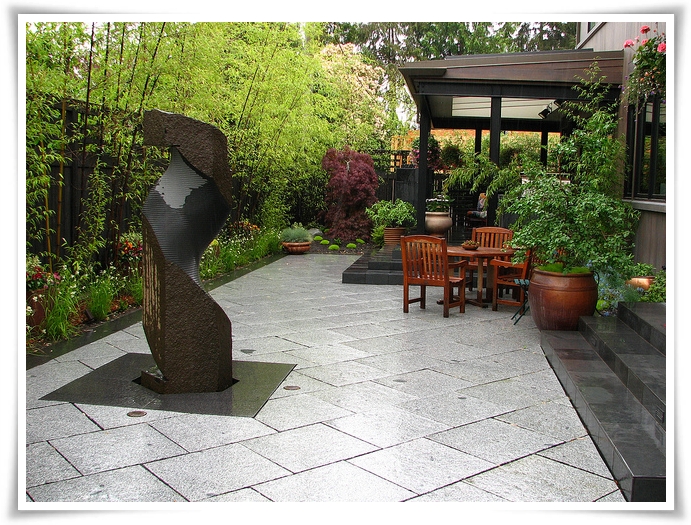
While everyone's familiar with vegetable gardens, herb gardens, and flower gardens, many homeowners have never even heard of a different type of eco-friendly garden.
What is a Rain Garden?
Rain gardens are planted in depressions around areas of excessive water runoff around your property, such as roofs, sidewalks, porches and driveways. When planting these garden types, you should use native plants, as they are accustomed to the climate, therefore requiring less maintenance, and are good at absorbing excess water. The garden slowly filters water into the ground, reducing the amount of storm water runoff around your home.
Environmental Impact
In many urban areas, where most surfaces are covered by buildings or concrete, storm water can't be absorbed by the ground. It has nowhere to go but down storm drains, carrying pollution along with it. Rain gardens help reduce the amount of rainwater forced down storm drains, thereby reducing the amount of polluted water that ends up in rivers and groundwater.
Origins
These garden types originated in Maryland during the early '90s as part of a low impact design for landscapes. These were most common on larger-scale projects like subdivisions. However, many landscapers have recently started offering these gardens in their landscaping services for their increasing popularity, due in part to their ease of maintenance.
Why You Should Consider Adding a Rain Garden
On rain water's way to the storm drain, it picks up things like animal waste, garbage, road salt, fertilizers and pesticides. According to an EPA report, nearly 70% of all of America's surface water pollution comes from storm water runoff. Rain gardens greatly reduce the amount of storm water runoff your property produces, thereby reducing the amount of pollution to our streams, rivers and lakes. These gardens also help you maintain the rest of your yard by reducing the amount of standing water that may accumulate in it, eliminating places for mosquitoes to breed as well as helping you conserve water.
Installation
There is a lot more to installing a rain garden than your usual DIY gardening project. This is why it's a good idea to at least consult a professional landscaping design service before you get started on the project to get a feel for what's involved. That said, here are the basic steps for installing a eco-friendly garden.
1. Make a map of your yard. This map should show how water flows on your property, so that you can build the rain garden in the most ideal spot. As you walk around your yard, note any slopes, depressions or hills.
2. Pick a spot. From the information you've gathered mapping out your property, choose a spot. Some good choices are often downspouts or any other areas of your yard that commonly accumulate the most water.
3. Determine the soil's drainage rate. This step is a bit technical, which is why it should probably be done by a professional. It involves digging a hole and testing the soil's rate of water drainage. This information will help you determine the best type of rain garden to incorporate into your landscape design.
4. Determine its size. In most cases, rain gardens are between 6 to 24 inches deep. A landscaping service professional should be able to determine what size is most appropriate for your yard.
5. Start digging. This step is also one that's probably best left to a landscaping services company. This includes constructing the bed, planting appropriate native plants, and accommodating for water overflow. You may also need to create a rock-lined trench to direct water from downspouts to the garden.
6. Maintenance. One of the nice things about rain gardens is that you can easily handle the maintenance on your own. This involves simple things like pulling weeds, mulching and pruning. Most homeowners simply work maintaining their rain garden into their usual gardening routine.
Though they may be a relatively new landscape design option to most homeowners, rain gardens are becoming much more popular due to both their benefits as well as their natural beauty. If you'd like to incorporate an eco-friendly garden into your yard, there are many landscaping professionals who will be glad to help you work out the details of building your very own garden.
What is a Rain Garden?
Rain gardens are planted in depressions around areas of excessive water runoff around your property, such as roofs, sidewalks, porches and driveways. When planting these garden types, you should use native plants, as they are accustomed to the climate, therefore requiring less maintenance, and are good at absorbing excess water. The garden slowly filters water into the ground, reducing the amount of storm water runoff around your home.
Environmental Impact
In many urban areas, where most surfaces are covered by buildings or concrete, storm water can't be absorbed by the ground. It has nowhere to go but down storm drains, carrying pollution along with it. Rain gardens help reduce the amount of rainwater forced down storm drains, thereby reducing the amount of polluted water that ends up in rivers and groundwater.
Origins
These garden types originated in Maryland during the early '90s as part of a low impact design for landscapes. These were most common on larger-scale projects like subdivisions. However, many landscapers have recently started offering these gardens in their landscaping services for their increasing popularity, due in part to their ease of maintenance.
Why You Should Consider Adding a Rain Garden
On rain water's way to the storm drain, it picks up things like animal waste, garbage, road salt, fertilizers and pesticides. According to an EPA report, nearly 70% of all of America's surface water pollution comes from storm water runoff. Rain gardens greatly reduce the amount of storm water runoff your property produces, thereby reducing the amount of pollution to our streams, rivers and lakes. These gardens also help you maintain the rest of your yard by reducing the amount of standing water that may accumulate in it, eliminating places for mosquitoes to breed as well as helping you conserve water.
Installation
There is a lot more to installing a rain garden than your usual DIY gardening project. This is why it's a good idea to at least consult a professional landscaping design service before you get started on the project to get a feel for what's involved. That said, here are the basic steps for installing a eco-friendly garden.
1. Make a map of your yard. This map should show how water flows on your property, so that you can build the rain garden in the most ideal spot. As you walk around your yard, note any slopes, depressions or hills.
2. Pick a spot. From the information you've gathered mapping out your property, choose a spot. Some good choices are often downspouts or any other areas of your yard that commonly accumulate the most water.
3. Determine the soil's drainage rate. This step is a bit technical, which is why it should probably be done by a professional. It involves digging a hole and testing the soil's rate of water drainage. This information will help you determine the best type of rain garden to incorporate into your landscape design.
4. Determine its size. In most cases, rain gardens are between 6 to 24 inches deep. A landscaping service professional should be able to determine what size is most appropriate for your yard.
5. Start digging. This step is also one that's probably best left to a landscaping services company. This includes constructing the bed, planting appropriate native plants, and accommodating for water overflow. You may also need to create a rock-lined trench to direct water from downspouts to the garden.
6. Maintenance. One of the nice things about rain gardens is that you can easily handle the maintenance on your own. This involves simple things like pulling weeds, mulching and pruning. Most homeowners simply work maintaining their rain garden into their usual gardening routine.
Though they may be a relatively new landscape design option to most homeowners, rain gardens are becoming much more popular due to both their benefits as well as their natural beauty. If you'd like to incorporate an eco-friendly garden into your yard, there are many landscaping professionals who will be glad to help you work out the details of building your very own garden.